by Leisure Dock | May 20, 2026 | Marketing
The Independent Restaurant Owner’s Complete Guide to Choosing the Right System
You’re Not Short on Software. You’re Short on the Right One. Why thousands of restaurant owners are switching from fragmented POS systems to LeisureDock Vista™, the only platform built exclusively around how restaurants actually operate.
Quick Verdict (TL;DR)
Epos Now is a capable general-purpose POS system built for every kind of business, from pet shops and car washes to clothing stores. That broad focus is precisely its problem for restaurant owners.
LeisureDock Vista™ is built solely for restaurants. It replaces your reservations tool, your POS, your kitchen display, your menu manager, your staff permissions system, your customer database, and your reporting dashboard, in one unified platform, with no software licence fees.
LeisureDock Vista™ is restaurant-first, always free to use, and built to grow with you. Epos Now is a hardware-first EPOS that treats restaurants as one of many verticals, and charges you accordingly.
Side-by-Side Comparison of LeisureDock Vista™ and EPOS Now
| Feature | LeisureDock Vista™ | Epos Now |
| Core Purpose | ✓ Built exclusively for restaurants | ✗ General EPOS for all business types |
| Ease of Use | ✓ Unified dashboard, no juggling tabs or apps | ✗ Requires setup, hardware config & integrations |
| Software Licence Fees | ✓ Free with a Featured Listing | ✗ Monthly subscription from $79/mo + hardware |
| Hardware Required | ✓ Software-only, runs on existing devices | ✗ Proprietary hardware bundles from $349+ |
| Table Reservations | ✓ Built-in smart reservations (native) | ✗ Requires OpenTable integration (extra cost) |
| Kitchen Order Flow | ✓ Native kitchen ticketing built-in | ✗ KDS is a paid add-on integration |
| QR Code Ordering | ✓ Native contactless QR ordering | ✗ Requires 'Order & Pay' add-on app |
| Menu Management | ✓ Real-time updates, instant sync | ~ Available but tied to POS terminal setup |
| Staff Permissions | ✓ Role-based access with custom controls | ~ Basic staff management, limited granularity |
| Customer Profiles | ✓ Order history, preferences, loyalty data | ~ CRM via third-party integrations |
| Custom Branded Site | ✓ Branded ordering site per restaurant | ✗ Requires website builder add-on |
| Reporting & Analytics | ✓ Restaurant-specific sales & performance reports | ✓ Solid cross-business reporting |
| Integrations | ~ Focused ecosystem (restaurant-specific) | ✓ 200+ third-party integrations across verticals |
| 24/7 Support | ✓ Platform support included | ✓ 24/7 support (premium plans) |
| Scalability | ✓ Unlimited usage, scales with growth | ~ Tiered pricing grows with transaction volume |
| Onboarding Complexity | ✓ Simple, no hardware, no engineer visit | ✗ Hardware setup + software config + training |
| Multi-location | ✓ Designed for multi-area & multi-venue | ✓ Enterprise multi-site (custom quote required) |
| AI Capabilities | ~ Data-informed reporting dashboard | ~ AI-assisted enterprise features (limited) |
| Contract Required | ✓ No contracts, no lock-in | ✗ 12-month subscription term (discounted price) |
Key Advantages of LeisureDock Vista™ Over EPOS Now
1. It’s Free, With No Catch Hidden in the Asterisk
Epos Now’s ‘from $349’ price tag requires a 12-month subscription commitment starting at $79/month. Add integration costs for OpenTable (reservations), Kitchen Display System, Order & Pay, and your website builder, and a restaurant owner can easily be paying $200–$400/month for functionality that LeisureDock Vista™ includes as standard.
LeisureDock Vista™ is made available at no software licence cost to restaurant owners who take a Featured Listing on the platform. No monthly SaaS fees. No tiered usage plans. No features locked behind an upgrade wall.
Why it matters: For independent restaurants operating on tight margins, reclaiming $200–$400/month in software costs directly improves profitability without any operational trade-off.
2. One Platform. Everything Connected. Nothing Left Out.
Epos Now is fundamentally a POS system. To run a complete restaurant operation on it, you need to integrate OpenTable for reservations, their own KDS add-on for kitchen displays, their Order & Pay app for contactless dining, a loyalty tool, and a website builder. Every integration adds cost, complexity, and a potential failure point.
LeisureDock Vista™ was engineered from the ground up as a complete restaurant operating system. Smart table reservations, live table and area management, real-time menu management, QR code ordering, kitchen order flow, integrated POS and payments, staff permissions, customer profiles, branded ordering site, and analytics, all native, all connected, all in one dashboard.
Why it matters: Fewer systems means fewer errors. When your reservations, table management, and kitchen flow are all in the same system, the left hand always knows what the right hand is doing.
3. No Hardware Lock-In or Upfront Capital Requirement

Epos Now is, at its core, a hardware business. Their entry pricing requires purchasing a terminal, cash drawer, and card machine bundle, a significant upfront investment before you’ve taken a single order on the new system. If your hardware fails or you want to switch, you’ve lost that capital.
LeisureDock Vista™ is software-native. It runs on devices you already own, tablets, computers, smartphones, meaning there is no hardware procurement delay, no engineer installation visit, and no capital asset sitting on your balance sheet depreciating.
Why it matters: For new restaurants or those with tight cash flow, getting operational quickly without a hardware investment is a significant competitive advantage.
4. Built Specifically for How Restaurants Actually Work
Epos Now’s platform serves car washes, nail salons, pharmacies, bookshops, and breweries alongside restaurants. That breadth means the product is necessarily generalised. Features that matter deeply to restaurants, like zone-based table management, kitchen ticket sequencing, or contactless QR ordering for dine-in guests, are add-ons rather than core product.
LeisureDock Vista™ was designed around a single use case: the complete guest journey from reservation to receipt. Every feature in the platform exists because a restaurant needs it.
Why it matters: When software is built for your exact workflow, your team spends less time working around it and more time delivering great service.
5. Unlimited Usage, No Scaling Penalties
Many SaaS platforms, including Epos Now’s tiered plans, charge more as your business grows, more transactions, more locations, more terminals mean higher monthly costs. This creates a perverse dynamic where your software expenses rise precisely when you need to protect margins most.
LeisureDock Vista™ operates on an unlimited-usage model. It scales with you as you grow without additional software licence costs, whether you add a second dining zone, a new menu section, or a second venue.
Why it matters: Predictable, zero ongoing software costs make financial planning far simpler and protect profitability during growth phases.
6. Faster Onboarding, No Technical Setup Required
Epos Now requires hardware procurement, shipping, physical setup, software configuration, payment processor onboarding, and staff training, a process that can take days or weeks before you’re fully live.
LeisureDock Vista™ is operational from the moment you complete your setup. No engineer visits. No hardware deliveries. No downtime. Your team can be trained and confident within a single shift.
Why it matters: Every day a restaurant is running on an inferior or broken system is lost revenue. Speed to value is a genuine competitive advantage.
7. Real-Time Menu Updates, Across Every Device, Instantly
Menu management with a traditional POS can be surprisingly cumbersome, changes made at the terminal don’t always sync immediately to the QR ordering interface, the kitchen display, or the customer-facing site. This creates embarrassing customer experiences when a dish is unavailable but still showing as orderable.
LeisureDock Vista™ syncs menu changes in real time across every touchpoint, the restaurant’s branded ordering site, QR code menus, kitchen display, and POS, the moment you make the update.
Why it matters: Eliminating menu lag prevents order errors, reduces waste, and removes a source of guest frustration that’s entirely preventable.
8. Customer Profiles That Build Genuine Loyalty
Epos Now offers CRM functionality primarily through third-party integrations like Loyalzoo or Mailchimp, meaning your customer data lives in a separate system from your transactions, your reservations, and your operations.
LeisureDock Vista™ stores customer preferences, order history, and visit data natively within the same system that processes their orders. This creates a unified view of each guest that enables genuinely personalised service, remembering dietary preferences, favourite dishes, or special occasions.
Why it matters: Repeat guests are the foundation of restaurant profitability. A platform that helps you recognise and reward them within your normal workflow creates loyalty without extra effort.
9. No Long-Term Contracts, Total Flexibility
Epos Now’s discounted pricing is tied to a 12-month subscription commitment. Exiting that contract early typically involves penalties. For a restaurant owner whose circumstances can change, seasonality, location changes, ownership transitions, being locked into a 12-month software contract is a genuine risk.
LeisureDock Vista™ carries no long-term contracts. The platform is available without lock-in, meaning you’re always free to adjust, expand, or change your approach without financial penalty.
Why it matters: Flexibility is not a luxury for restaurant operators, it’s a business necessity in an industry where conditions change rapidly.
10. Discovery-Layer Visibility as a Built-In Benefit
Epos Now is a back-of-house tool. It helps you run your restaurant but does nothing to help new customers find it. LeisureDock Vista™ is tied to a Featured Listing on the LeisureDock restaurant discovery platform, meaning the system that runs your operations is the same one that puts your restaurant in front of new diners actively searching for places to eat.
Why it matters: Most restaurant software focuses on operations. LeisureDock Vista™ is unique in that getting the management system also gives you a marketing and discovery presence, a genuine dual return on a single investment.
Where Epos Now Falls Short for Restaurants
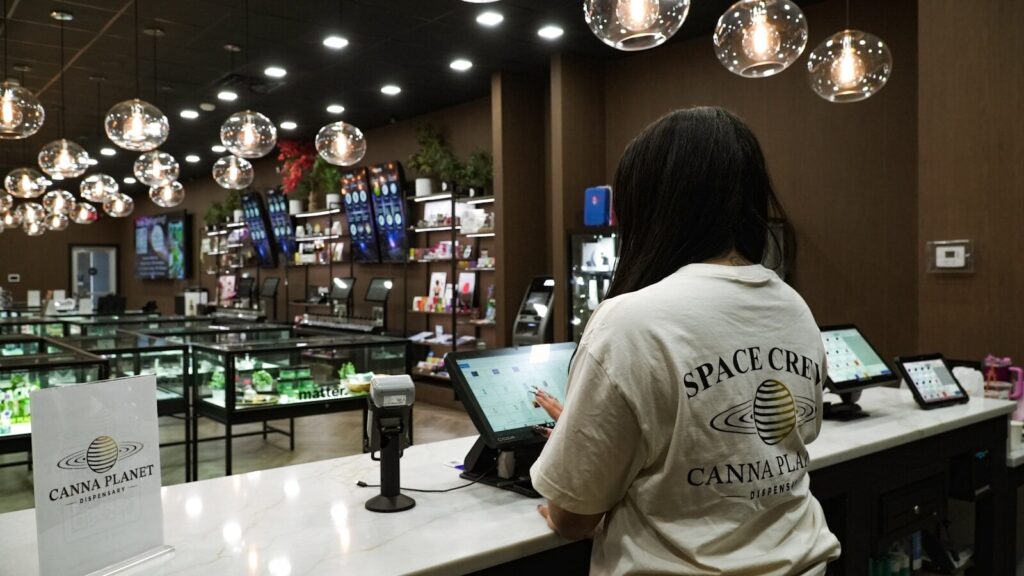
Epos Now is a genuinely well-built system for what it is: a broad-market EPOS solution serving dozens of business types. The following limitations aren’t criticisms of poor engineering, they’re the natural consequence of building a horizontal product for a vertical problem.
The ‘Everything is an Add-On’ Problem
Core restaurant functions, table reservations, kitchen displays, contactless ordering, and customer-facing menus, are not native to Epos Now. They are achieved through integrations: OpenTable for reservations, their own KDS app (separate download and configuration), Order & Pay for tableside ordering, and a website builder for your online presence. Each add-on is another cost line, another login, another potential point of failure, and another piece of training your staff need.
Hardware Dependency Creates Cost and Complexity
Epos Now’s business model is built around hardware sales. Their entry-level offer bundles a terminal, printer, and card machine, and their software is optimised for that hardware stack. Restaurants running on a mix of tablets, phones, and existing devices face friction in setup. Restaurants that experience hardware failure face operational downtime while waiting for replacements.
Pricing Opacity and Hidden Total Cost
The advertised ‘$349’ price point requires careful reading. It comes with a mandatory 12-month subscription starting at $79/month, making the true first-year cost approximately $1,297 before any integration costs, payment processing fees, or hardware accessories. For a restaurant adding reservations (OpenTable), kitchen display, and Order & Pay functionality, the total cost of ownership easily exceeds $3,000–$4,000 per year.
Built for Every Business, Optimised for None
When a platform must serve car washes, gyms, pharmacies, pet stores, and restaurants simultaneously, the product roadmap inevitably serves the average of all those needs rather than the specific depth of any one. Restaurant-specific workflow optimisation, how orders flow from table to kitchen to plate, is not Epos Now’s core design priority.
No Discovery or Marketing Benefit
Epos Now helps you manage the business you have. It does nothing to bring new guests through the door. For independent restaurants competing against chains with marketing departments, this represents a missed opportunity.
Best Fit: Who Should Use Each?
| Epos Now is better for... | LeisureDock Vista™ is better for... |
| Retailers needing a traditional till system | Independent dine-in restaurants and cafes |
| Multi-vertical businesses (retail + cafe) | Restaurant owners reducing software costs |
| Businesses already invested in Epos hardware | New restaurants wanting fast operational setup |
| Enterprise chains needing 200+ integrations | Operators who want zero long-term contracts |
| Businesses needing a card machine ecosystem | Any restaurant wanting discovery + management |
Value for Money Analysis
| What You Actually Pay with Epos Now (Year 1) | | What You Actually Pay with LeisureDock Vista™ (Year 1) |
| Item | Hardware bundle (terminal, printer, card machine) | Item | LeisureDock Vista™ (full restaurant management system) |
| Est. Annual Cost | $349 – $599 | Annual Cost* | £0 software fees |
| Software subscription ($79/mo × 12) | $948 | Reservations (built-in) | Included |
| OpenTable integration (reservations) | $~$600 – $1,200/yr | Kitchen order flow (built-in) | Included |
| KDS (kitchen display) add-on | ~$240/yr | QR code ordering (built-in) | Included |
| Order & Pay (QR contactless ordering) | ~$240/yr | Branded ordering site (built-in) | Included |
| Website builder add-on | ~$120/yr | Customer profiles & history (built-in) | Included |
| Payment processing fees (blended) | Variable | Staff permissions management (built-in) | Included |
| TOTAL ESTIMATED YEAR 1 | $2,497 – $3,347+ | Discovery listing on LeisureDock platform* | Included |
| | TOTAL ESTIMATED YEAR 1 | £0 in software licence fees |
* Available via a LeisureDock Featured Listing. Payment processing fees apply separately and are standard across both platforms.
Real-World Use Cases
Meet Maria, Owner of a 60-Cover Italian Restaurant in North London
The Problem
Maria runs a busy Italian restaurant with a dine-in section, a small private dining room, and a growing takeaway service. She’s currently using three tools: a basic POS, a paper reservation book, and a WhatsApp group for kitchen communication. She’s losing bookings to double-entries, losing orders to miscommunication, and spending two hours every Sunday manually reconciling the week’s takings from different sources.
The Epos Now Path
Maria researches Epos Now and is attracted by the ‘$349’ headline. She proceeds:
- Purchases the hardware bundle, waits 5 business days for delivery
- Books an engineer visit for setup, another 2 days
- Configures the POS software and menus, 4 hours with support
- Integrates OpenTable for reservations, additional monthly cost
- Adds the KDS app for kitchen display, another integration
- Adds Order & Pay for the tables, another integration, another monthly fee
Six weeks in, Maria is operational, and paying approximately £180–£250/month in combined software costs. Her reservation system and POS still don’t talk to each other perfectly, and updating the menu requires changes in two places.
The LeisureDock Vista™ Path
Maria discovers LeisureDock Vista™:
- Creates her Featured Listing and gets access to LeisureDock Vista™, same day
- Configures her tables, zones, and menu from her existing laptop, 2 hours
- Sets up staff permissions for her team, 30 minutes
- Activates QR ordering for her tables, immediate, no extra cost
- Her reservation system and POS are the same system, no sync issues
- Her kitchen receives orders directly from the dining room, no WhatsApp needed
By the end of day one, Maria is fully operational. Her Sunday reconciliation takes 15 minutes via the reporting dashboard. Her software cost: zero ongoing licence fees. And new diners searching for Italian restaurants in her area can now find her directly on LeisureDock.
Final Verdict: LeisureDock Vista™ or EPOS Now?

LeisureDock Vista™ is the Smarter Choice for Independent Restaurant Owners.
Epos Now has built a solid business serving tens of thousands of locations across many industries. Their hardware is reliable, their integrations are broad, and their support infrastructure is mature. For a retailer, a cafe chain, or a multi-vertical hospitality business, it deserves serious consideration.
But for an independent restaurant owner, particularly one operating a dine-in venue where reservations, table flow, kitchen communication, and guest experience are the heart of the operation, Epos Now asks you to pay more for less, integrate your way to completeness, and accept that your software was built for someone else first.
LeisureDock Vista™ was built for your exact situation. It handles everything from the moment a guest books a table to the moment they pay their bill, without a single integration required, without hardware dependencies, without monthly licence fees, and without a 12-month contract holding you in place.
The question isn’t whether you can afford LeisureDock Vista™. The question is whether you can afford to keep managing your restaurant with anything less.
Get your Featured Listing and access LeisureDock Vista™ today at leisuredock.com
No hardware. No contract. No monthly fees. Just a better way to run your restaurant.
FAQs
“Isn’t Epos Now more established and therefore more reliable?”
Epos Now serves 80,000 locations globally, that’s an impressive scale. But scale in EPOS hardware doesn’t translate to depth in restaurant management. LeisureDock Vista™ is purpose-built for the workflows that actually matter to your restaurant. A platform used by 80,000 businesses of all types is not the same as a platform designed for your specific one.
“I’m already using Epos Now. Is switching worth the disruption?”
The switching cost is lower than you might expect. LeisureDock Vista™ is software-only, there’s no hardware to return, no engineer to book. Your menus, table layouts, and customer data can be configured in hours. The ongoing saving in software costs will typically recover any transition effort within the first month.
“What if I need integrations that only Epos Now offers?”
LeisureDock Vista™ is built to be self-sufficient for the core restaurant operation. If your restaurant has highly specific integration requirements, for example, custom accounting software or third-party loyalty programmes, that’s a genuine conversation to have. But for the vast majority of independent restaurant operators, the integrations they need are already built into LeisureDock Vista™ as native features.
“Does free actually mean free? What’s the catch?”
LeisureDock Vista™ is made available without software licence fees to restaurants with a Featured Listing on LeisureDock. The Featured Listing has its own cost structure, which gives your restaurant discovery visibility on the platform in addition to access to the management system. There are no hidden recurring software fees, no feature paywalls, and no tiered usage costs. Payment processing fees apply separately, as they do with any POS system.
Switching from Epos Now to LeisureDock Vista™
Making the switch is simpler than most restaurant owners expect. Here’s what the transition typically looks like:
- Create your Featured Listing on LeisureDock (takes 2–3 minutes)
- Access LeisureDock Vista™ via your dashboard, no download, no install
- Configure your dining areas, tables, and zones visually
- Build your menu in the system (replicate your existing menu)
- Set up staff accounts with appropriate permissions
- Run a table of friendly ‘test diners’ through the full flow
- Go live.
Most restaurants complete this transition in under a day. The operational upside begins immediately. Click here to get started.
This comparison is prepared by LeisureDock for informational purposes. All Epos Now pricing is based on publicly available information as of 2026 and is subject to change. Integration costs are estimated from standard published rates. LeisureDock makes no warranties about competitor pricing accuracy. Readers are encouraged to verify current pricing directly with both platforms.
by Leisure Dock | May 19, 2026 | Marketing
Why “Free” POS Software Is No Longer a Compromise
If you’re running a restaurant today, you’re already juggling razor-thin margins, rising food costs, staffing challenges, and increasingly demanding customers. The last thing you want is to pour hundreds, or even thousands, into complicated POS systems that slow you down instead of helping you grow. That’s exactly why free POS software for restaurants has become one of the most searched solutions among modern restaurant owners.
But here’s the reality most people don’t tell you:
Not all “free” POS systems are truly free, and many come with hidden limitations that cost you more in the long run.
Based on real-world usage patterns and what we’ve seen across independent restaurants, cafés, and fast-growing hospitality brands, the right free POS solution can:
- Reduce operational overhead
- Improve order accuracy
- Automate bookings and customer management
- Increase revenue through better data visibility
And in some cases, it can outperform expensive legacy systems. Let’s break it down properly.
The Real Problem: Why Most Restaurant POS Systems Fail Owners
Before jumping into solutions, it’s important to understand why so many restaurant owners feel frustrated with POS systems in the first place.
1. Hidden Costs That Add Up Fast: Many POS platforms advertise “free” plans, but restrict core features like reporting, integrations, or table management. Over time, you’re pushed into expensive upgrades. In practice, we’ve seen restaurants start with a free plan and end up paying £100–£300/month within a year.
2. Overcomplicated Interfaces: Traditional POS systems are often built for enterprise environments, not real kitchens or busy front-of-house staff. This leads to:
- Longer training times
- More ordering errors
- Slower service during peak hours
3. Lack of Integration Between Systems: Many restaurants still use separate tools for:
- POS
- Reservations
- Customer data
- Inventory
This creates data silos, inefficiencies, and missed revenue opportunities.
4. Poor Scalability: What works for a small café often breaks down when:
- You add more tables
- Expand to multiple locations
- Introduce online ordering
Free POS Software for Restaurants: What Are Your Options?
Broadly, restaurant owners have three choices:
1. Traditional Paid POS Systems: Examples include enterprise-grade tools with robust features, but high upfront and monthly costs.
Best for: Large chains with complex needs
Downside: Expensive, rigid, and often overkill for small-to-mid businesses
2. “Freemium” POS Platforms: These offer a basic free plan with limited features.
Best for: Testing POS systems
Downside: Essential tools often locked behind paywalls
3. Truly Free, Integrated Restaurant Management Platforms (Emerging Trend): This is where the market is shifting. Modern platforms now combine:
- POS
- Reservation systems
- Customer management
- Analytics
…into a single, streamlined solution, often with a genuinely usable free tier. This is where tools like LeisureDock are gaining traction.
A Practical Look at a Modern Free POS Solution (LeisureDock)

Instead of pitching features, let’s look at how a modern free POS software for restaurants actually works in real scenarios.
Unified Restaurant Management (Not Just POS)
LeisureDock isn’t just a POS, it functions as a complete restaurant management system. From what we’ve observed in real use cases, this matters because:
- Orders, reservations, and customer data live in one place
- Staff don’t need to switch between systems
- Managers get a real-time overview of operations
Check out the LeisureDock Vista restaurant management system here.
Feature → Benefit Breakdown (Real-World Perspective)
1. Order Management That Speeds Up Service: Instead of clunky interfaces, orders can be processed quickly with minimal friction.
Outcome: Faster table turnover and fewer mistakes during peak hours.
2. Built-In Reservation System: Most POS systems require third-party integrations for bookings. With integrated reservations:
- Tables are automatically managed
- Walk-ins and bookings are synced
- Overbooking risks drop significantly
What we’ve seen: Restaurants improve seating efficiency by 15–25%.
3. Centralised Customer Data: Every interaction, orders, visits, preferences, is tracked.
Why this matters:
- Better customer retention
- Personalised service
- Increased repeat visits
4. Real-Time Analytics Without Complexity: Instead of overwhelming dashboards, the system provides actionable insights like:
- Best-selling items
- Peak hours
- Revenue trends
Outcome: Smarter decisions without needing a data analyst.
5. Zero Upfront Cost Barrier: This is where it becomes compelling. For new or growing restaurants:
- No large upfront investment
- Immediate operational improvement
- Lower financial risk
What Makes This Approach Different From Other Free POS Software?
Let’s be direct, there are other free POS systems out there. But based on comparative analysis and real-world feedback, here’s where modern platforms like LeisureDock stand out:
All-in-One vs Fragmented Tools: Most “free” POS systems only handle transactions. LeisureDock combines:
- POS
- Reservations
- Customer management
Result: Fewer tools, lower complexity.
Designed for Real Restaurant Workflows: Instead of adapting your operations to the software, the system fits how restaurants actually operate.
Scales With You: You can start small and expand without needing to migrate systems, a major pain point we’ve seen with legacy tools.
Honest Limitation Acknowledgement: No system is perfect. Some advanced enterprise features may still require upgrades
Larger chains may need deeper customisation. But for the majority of small to mid-sized restaurants, the value-to-cost ratio is hard to ignore.
Practical Use Cases: Who Benefits Most?
1. Small Restaurant Owners: You need efficiency without high costs.
Result: Lower overhead + smoother daily operations.
2. Café & Quick-Service Businesses: Speed is everything.
Result: Faster order processing and reduced queues.
3. Growing Restaurant Brands: You’re scaling and need systems that won’t break.
Result: Centralised control across locations.
4. First-Time Restaurant Entrepreneurs: You don’t want to risk capital on expensive tools.
Result: Start lean, scale confidently.
Expert Tips for Choosing the Best Free POS Software for Restaurants

Based on industry experience and what actually works in practice:
1. Prioritise Integration Over Features: A POS that works with reservations and CRM is more valuable than one with 50 isolated features.
2. Test During Peak Hours: Always trial the system during busy service periods, not quiet times.
3. Check Data Ownership: Ensure you fully own your customer and sales data.
4. Avoid Vendor Lock-In: Choose a system that allows easy scaling without forcing upgrades too early.
5. Focus on Staff Usability: If your staff struggle to use it, it’s the wrong system, no matter how advanced it looks.
FAQ: Free POS Software for Restaurants
Q: What is free POS software for restaurants?
A: Free POS software for restaurants is a system that allows businesses to process orders, manage sales, and track operations without upfront costs. The best options also include features like reservations and analytics.
Q: Is free POS software reliable for busy restaurants?
A: Yes, modern free POS systems are designed to handle high-volume environments. Reliability depends on the platform’s infrastructure and ease of use.
Q: What is the best free POS software for restaurants?
A: The best free POS software combines ease of use, scalability, and integrated features like reservations and customer management. Platforms that offer all-in-one solutions tend to deliver the highest value.
Q: Are there hidden costs in free POS systems?
A: Many free POS systems include hidden costs through paid upgrades or transaction fees. It’s important to review pricing structures carefully.
Q: Can free POS software handle reservations?
A: Some advanced free POS systems include built-in reservation management, eliminating the need for third-party tools.
Q: Is cloud-based POS better than traditional systems?
A: Yes, cloud-based POS systems offer greater flexibility, real-time updates, and easier scalability compared to traditional on-premise systems.
Q: How does POS software improve restaurant efficiency?
A: POS software streamlines order processing, reduces errors, and provides data insights that help optimise operations and staffing.
Q: Can I use free POS software for multiple locations?
A: Some platforms support multi-location management even on free plans, but scalability features vary by provider.
Q: Does free POS software include analytics?
A: Many modern systems include basic analytics, such as sales trends and performance metrics, even in free versions.
Q: Is free POS software suitable for startups?
A: Yes, free POS software is ideal for startups because it reduces upfront costs while providing essential tools for managing operations.
Conclusion: The Smart Move for Modern Restaurant Owners
The idea that “you get what you pay for” doesn’t fully apply anymore, especially when it comes to free POS software for restaurants. What we’re seeing in the industry is a shift toward smarter, integrated platforms that prioritise usability, automation, and real operational value over bloated feature lists.
If you’re looking to:
- Cut costs
- Simplify operations
- Improve customer experience
- Scale without friction
…then exploring a modern, all-in-one solution like LeisureDock is a logical next step. You don’t need to overhaul your entire business overnight, but choosing the right POS system today can quietly transform how your restaurant runs tomorrow.
by Leisure Dock | May 18, 2026 | Marketing
Quick Verdict (TL;DR)
LeisureDock offers a truly free, all-in-one restaurant management system that unifies reservations, orders, payments, and staff management without the hidden costs and complex pricing structures often associated with enterprise solutions like Restroworks. For restaurant owners and managers seeking efficiency, scalability, and modern features without breaking the bank, LeisureDock is the clear winner.
Side-by-Side Comparison Table Between LeisureDock and Restroworks
| Feature | LeisureDock Vista | Restroworks |
| Ease of Use | Intuitive, unified dashboard designed for immediate adoption without extensive training. | Complex enterprise system requiring significant onboarding and IT support. |
| Features | All-in-one: Reservations, POS, QR ordering, staff management, and analytics included. | Modular approach requiring multiple add-ons for full functionality. |
| Pricing | 100% Free with no monthly fees, contracts, or hidden costs. | Expensive, custom pricing starting around $200/user/year, plus hardware and integration fees. |
| Automation | Seamless flow from QR order to kitchen ticket to payment, reducing manual errors. | Robust but often requires complex setup and integration management. |
| AI Capabilities | Built-in smart table management and personalized customer experience tracking. | Relies heavily on third-party integrations for advanced AI features. |
| Support | Direct, accessible support focused on independent and growing restaurants. | Enterprise-level support that can be slow for smaller operators. |
| Scalability | Unlimited usage that grows with your business at no extra cost. | Scales well but costs increase significantly with each new location or terminal. |
Key Advantages of LeisureDock over Restroworks
LeisureDock stands out as the superior choice for modern restaurant owners and managers due to several compelling advantages:
- Truly Free, No Hidden Costs: Unlike Restroworks, which operates on a complex, tiered pricing model that can quickly escalate with additional users, features, and hardware, LeisureDock offers its comprehensive suite entirely free. This eliminates significant overhead, allowing restaurants to invest more in their staff, ingredients, or customer experience rather than expensive software licenses
- Unified, Intuitive Platform: LeisureDock is designed as a single, cohesive system that integrates reservations, point-of-sale (POS), kitchen management, staff scheduling, and customer relationship management into one intuitive dashboard. This contrasts sharply with Restroworks’ modular approach, which often necessitates integrating multiple separate tools, leading to a steeper learning curve and potential compatibility issues
- Modern, Contactless Customer Experience: With built-in QR code ordering and customizable digital menus, LeisureDock empowers restaurants to offer a seamless, contactless experience. Customers can browse, order, and pay directly from their smartphones, significantly reducing wait times and enhancing satisfaction. While Restroworks offers digital ordering, it often requires additional modules or integrations, adding complexity and cost.
- Designed for Growth and Scalability without Penalty: LeisureDock is built to scale with your restaurant’s growth without introducing new costs. Whether you’re a single-location cafe or a multi-venue operation, the system supports unlimited usage. Restroworks, conversely, ties its pricing to factors like the number of terminals and software requirements, meaning growth directly translates to increased expenditure.
- Real-time Insights and Data-Driven Decisions: LeisureDock provides comprehensive, real-time reporting on sales trends, staff performance, and customer behavior. This integrated data empowers owners and managers to make informed decisions quickly, optimizing operations and profitability. While Restroworks also offers reporting, the unified nature of LeisureDock’s data collection simplifies analysis and reduces the need to consolidate information from disparate systems.
- Simplified Onboarding and Reduced Training: The user-friendly interface and all-in-one design of LeisureDock mean that staff can be onboarded quickly with minimal training. This reduces the time and resources typically spent on learning complex enterprise software, a common challenge with systems like Restroworks that cater to larger, more established chains with dedicated IT departments.
Where Restroworks Falls Short

While Restroworks is a capable platform, particularly for large enterprise chains, it presents several limitations when compared to LeisureDock, especially for the target audience of restaurant owners and managers:
- High Cost and Opaque Pricing: Restroworks employs a custom pricing model that starts at approximately $200 per user per year, with additional costs for hardware, integrations, and advanced modules. This can quickly become prohibitive for independent restaurants or smaller chains. The lack of transparent pricing makes budgeting difficult and often leads to unexpected expenses, a stark contrast to LeisureDock’s completely free offering.
- Complexity and Steep Learning Curve: Designed for enterprise-level operations, Restroworks can be overly complex for many restaurant owners. Its extensive features and modular structure often require significant training and dedicated IT support for implementation and ongoing management. This complexity can hinder adoption and lead to inefficiencies, particularly in environments where staff turnover is common.
- Outdated Approach to Integration: While Restroworks boasts over 500 integrations, its reliance on third-party solutions for many functionalities can create a fragmented user experience. Managing multiple integrations can be time-consuming and prone to errors, whereas LeisureDock’s all-in-one system ensures seamless operation without the need for constant oversight of various connected services.
- Less Agile and Innovative: Restroworks, as an established enterprise solution, may be slower to adapt to rapidly changing market needs and technological advancements, such as the increasing demand for AI-driven insights and advanced automation in smaller, agile restaurant settings. LeisureDock, by focusing on a modern, unified approach, can more readily incorporate these innovations.
- Scalability at a Price: While Restroworks can scale, its pricing model means that growth directly correlates with increased costs. Expanding to new locations or adding more terminals significantly inflates the operational budget. LeisureDock, on the other hand, offers unlimited usage, allowing restaurants to grow without incurring additional software expenses.
Best Fit: Who Should Use Each?
Restroworks is better suited for:
Restroworks primarily targets large, multi-national restaurant chains or enterprise-level hospitality groups with substantial budgets and dedicated IT departments. These organisations often require highly customised solutions, extensive integrations with existing legacy systems, and are prepared to manage the associated costs and complexities. Its robust, albeit intricate, feature set can cater to the specific, often unique, operational demands of such large-scale businesses.
LeisureDock is better for most users, especially restaurant owners and managers who:
LeisureDock is ideal for independent restaurant owners, small to medium-sized chains, cafes, and multi-location venues that prioritize efficiency, ease of use, and cost-effectiveness. It is particularly beneficial for those who:
- Seek a comprehensive, all-in-one solution without the burden of monthly subscription fees or hidden costs.
- Value a streamlined, intuitive user experience that requires minimal training for staff.
- Want to offer a modern, contactless customer experience through integrated digital ordering and reservations.
- Need real-time insights and robust management tools to optimize operations and profitability without added complexity.
- Are looking for a scalable solution that supports growth without penalizing them with increased software expenses.
- Desire to reduce operational friction and eliminate the need for juggling multiple disconnected systems.
Value for Money Analysis
When evaluating value for money, it’s crucial to look beyond the initial price tag and consider the total cost of ownership, operational efficiency gains, and potential revenue increases. Here, LeisureDock presents a significantly more compelling proposition:
LeisureDock: Unbeatable Value Through Zero Cost and High Efficiency
LeisureDock’s primary value proposition is its completely free model. This immediately eliminates a major operational expense that restaurants typically incur with software subscriptions. Beyond the direct cost savings, LeisureDock offers:
- Zero Hidden Costs: There are no per-user fees, per-terminal charges, or additional costs for essential features. This transparency allows for predictable budgeting and avoids the unpleasant surprises often associated with enterprise software.
- High ROI from Day One: By unifying all critical restaurant operations; reservations, POS, ordering, staff, and analytics; LeisureDock drastically reduces manual tasks, minimizes errors, and speeds up service. These efficiencies directly translate into cost savings and increased table turnover, leading to a rapid return on investment without any upfront software expenditure.
- Future-Proof Scalability: As a restaurant grows, LeisureDock scales effortlessly without increasing software costs. This means that as revenue increases, the profit margin is not eroded by escalating software expenses, offering true long-term value.
Restroworks: Value Tied to High Investment and Potential Hidden Costs
Restroworks, while offering a comprehensive suite, positions its value differently, primarily for large enterprises capable of significant investment:
- Significant Upfront and Ongoing Costs: With pricing starting at $200 per user per year and custom quotes for comprehensive solutions, Restroworks represents a substantial financial commitment. This cost can quickly multiply with multiple users, terminals, and required integrations, making it a high barrier to entry for many restaurants
- Potential for Hidden Costs: The modular nature and reliance on integrations mean that what appears to be a base price can quickly inflate with necessary add-ons, hardware purchases, and implementation services. This lack of clear, all-inclusive pricing can lead to budget overruns.
- ROI Dependent on Scale and Optimisation: While Restroworks can deliver strong ROI for large chains through extensive optimisation and data analysis, achieving this requires significant investment in setup, training, and ongoing management. Smaller operations may find the cost-benefit ratio less favourable due to the complexity and expense involved.
In essence, LeisureDock provides immediate, tangible value through its free, all-inclusive model, allowing restaurants to reallocate resources to other critical areas. Restroworks, while powerful, demands a higher financial and operational investment, making its value proposition more suited to organisations with the capacity to absorb these costs and leverage its enterprise-grade features fully.
Real-World Use Case
Consider Maria, a restaurant owner managing a bustling mid-sized bistro. Before switching to LeisureDock, Maria used a combination of a basic POS system, a separate online reservation platform, and manual spreadsheets for staff scheduling and inventory. This fragmented approach led to frequent double bookings, miscommunicated orders between the front-of-house and kitchen, and payment reconciliation headaches at the end of each day. Her monthly software expenses were considerable, and she often felt overwhelmed by the administrative burden.
Maria considered Restroworks, but the custom pricing quote was daunting, requiring a significant upfront investment and ongoing fees that would strain her budget. The sales process also highlighted the need for extensive training and potential IT support, which she couldn’t afford.
Upon discovering LeisureDock, Maria was initially sceptical of a free, all-in-one solution. However, the intuitive setup and comprehensive features quickly won her over. Now, customers effortlessly book tables online, and these reservations instantly sync with her table management system. Orders placed via QR codes go directly to the kitchen display system, eliminating errors and speeding up service.
Staff schedules are managed within the same platform, and all payments are processed and tracked seamlessly. Maria has real-time insights into her sales and inventory, allowing her to make smarter purchasing decisions and optimize her menu. Her operational costs have plummeted, and her team is happier and more efficient. LeisureDock has transformed her bistro from a chaotic operation into a smoothly running, profitable business, all without a single software subscription fee.
Final Verdict: LeisureDock or Restroworks?
In the dynamic and competitive restaurant industry, choosing the right management system is paramount to success. While Restroworks offers a robust, enterprise-grade solution for large chains with significant resources, its complexity, opaque pricing, and reliance on modular integrations can be a considerable barrier for the vast majority of restaurant owners and managers.
LeisureDock emerges as the unequivocally smarter choice. It delivers a truly all-in-one, free, and intuitive platform that addresses every critical aspect of restaurant operations, from reservations and POS to staff management and real-time analytics. By eliminating software costs and streamlining workflows, LeisureDock empowers restaurants to enhance efficiency, elevate customer experience, and drive profitability without compromise. It’s not just a cost-effective alternative; it’s a superior, modern solution built for the realities of today’s restaurant business.
Ready to transform your restaurant operations and boost your bottom line? Experience the difference with LeisureDock today. Get started for free and discover how effortless restaurant management can be.
by Leisure Dock | May 16, 2026 | Marketing
Stop Paying for What Should Be Free: Why LeisureDock Vista™ is the Ultimate Rezku Alternative
Quick Verdict (TL;DR)
While Rezku offers a solid, traditional POS system with a $99/month starting price tag and expensive hardware add-ons, LeisureDock Vista™ provides a completely free, all-in-one restaurant management system. LeisureDock eliminates the friction of monthly subscriptions and disconnected tools by unifying reservations, orders, payments, and staff management into a single, modern platform. For restaurant owners who want enterprise-level control without enterprise-level costs, LeisureDock is the clear winner.
Side-by-Side Comparison Table of LeisureDock and Rezku
| Feature | LeisureDock Vista™ | Rezku |
| Ease of Use | Unified dashboard, zero friction, intuitive design | Traditional POS interface, requires hardware setup |
| Features | Reservations, POS, QR ordering, staff & table management | POS, online ordering, loyalty, inventory, kitchen display |
| Pricing | 100% FREE (No monthly fees, no contracts) | Starts at $99/month + hardware & add-on costs |
| Automation | Automated reservations, real-time menu syncing, smart seating | Automated reporting, offline mode |
| AI Capabilities | Intelligent reservation handling, smart table tracking | Not explicitly highlighted |
| Support | Email, Comprehensive Help & FAQ, dedicated support | 24/7 US-based support |
| Scalability | Unlimited usage, scales seamlessly as you grow | Tiered pricing, additional costs for kiosks ($50/mo) |
Key Advantages of LeisureDock Vista™ Over Rezku
1. Zero Monthly Fees (Better Value for Money)
LeisureDock is completely free to use. Unlike Rezku, which starts at $99/month and charges extra for features like customer-facing kiosks ($50/month) and website marketing ($399/month), LeisureDock gives you a complete system without the bloated enterprise pricing. This means stronger ROI from day one.
2. True All-in-One Unified System
Most platforms, including Rezku, are built around the POS and require you to bolt on other features. LeisureDock was built from the ground up as a unified operating system. It handles everything from the moment a guest books a table to the moment they pay their bill, eliminating the need for multiple disconnected tools.
3. Smarter Reservation & Table Management
LeisureDock excels at preventing double bookings and managing peak hours intelligently. Its real-time table tracking ensures you always know which tables are occupied, available, or need cleaning, allowing you to turn tables faster and seat guests more efficiently.
4. Modern Contactless Experience
With built-in QR code ordering and a customised digital ordering site for every restaurant, LeisureDock aligns perfectly with modern dining expectations. Guests can scan, browse, order, and pay from their phones, reducing wait times and freeing up your staff.
5. Simpler Onboarding and Unlimited Scalability
Because there are no long-term contracts or expensive hardware requirements, getting started with LeisureDock is frictionless. Furthermore, it offers unlimited usage, meaning the system scales with your restaurant as you grow, without penalizing you with higher subscription tiers.
Where Rezku Falls Short
While Rezku is a capable system, it falls short for modern, cost-conscious operators in several key areas:
- High Cost for Standard Features: Paying $99/month just to access the base software, plus additional fees for kiosks and marketing tools, quickly eats into a restaurant’s profit margins.
- Hardware Dependency: Rezku relies heavily on proprietary or specific hardware setups (stands, terminals, specific printers), which adds significant upfront costs and complexity.
- Traditional POS Focus: Rezku is primarily a POS system that has added other features over time. It lacks the seamless, built-in reservation and table management flow that a true “operating system” like LeisureDock provides.
- Pricing Penalties for Growth: As your restaurant grows and you need more terminals or kiosks, Rezku’s pricing model means your costs will increase proportionally.
Best Fit: Who Should Use Each?
Who should use Rezku?
Rezku is best suited for restaurants that are deeply entrenched in traditional POS hardware setups and are willing to pay premium monthly fees for 24/7 phone support and specific third-party integrations (like DoorDash Drive).
Who should use LeisureDock Vista™?
LeisureDock is the superior choice for modern dine-in restaurants, cafés, and multi-location venues that want to eliminate software overhead. If you want a sleek, unified system that handles reservations, QR ordering, and payments without monthly subscription fees, LeisureDock is the perfect fit.
Value for Money Analysis
When comparing value, the math is straightforward.
With Rezku, a restaurant is looking at a minimum of $1,188 per year just for the base software, not including the upfront costs of iPads, stands, card readers, and printers. If you add a single self-ordering kiosk, that’s another $600 per year.
With LeisureDock Vista™, the software cost is $0. You get a complete table booking, ordering, and management platform for free. The ROI is immediate because you are eliminating a major operational expense while still gaining access to enterprise-grade tools like real-time menu syncing, QR ordering, and comprehensive sales reports.
Imagine a busy Friday night at a mid-sized bistro.
Using Rezku, the staff is managing walk-ins and phone reservations manually because the POS is focused on ringing up orders. A server takes an order at the table, but the kitchen display system lags slightly, causing a delay. Meanwhile, the owner is paying $150/month for the software and a kiosk add-on.
Using LeisureDock Vista™, the experience is entirely different. A group of four books a table online; the system automatically assigns them an optimal slot, preventing a double booking. When they arrive, the host sees their table is ready on the real-time dashboard. The guests sit down, scan the custom-branded QR code, and send their drink orders directly to the kitchen before the server even approaches. The entire flow is seamless, the table turns 15 minutes faster, and the owner paid $0 in software fees for the privilege.
Final Verdict: LeisureDock or Rezku
In an industry where margins are razor-thin, paying high monthly fees for restaurant management software is an outdated concept. While Rezku offers a traditional, reliable POS experience, it comes with the burden of subscriptions, hardware costs, and add-on fees.
LeisureDock Vista™ represents the future of restaurant management. By offering a powerful, unified system that handles reservations, orders, and payments for free, it allows owners to replace chaos with clarity and keep their hard-earned revenue.
Stop paying for what should be free. Upgrade your restaurant’s operating system today with LeisureDock Vista™.
Quick question: Is LeisureDock really free? What’s the catch?
Answer: Yes, all the reservation and management system is completely free to use when you claim and upgrade your listing on the LeisureDock platform. There are no hidden monthly software subscription fees or long-term contracts. We believe in removing the cost barrier so you can focus on running your restaurant.
Switching from Rezku to LeisureDock
Switching is easier than you think. Because LeisureDock doesn’t require you to purchase expensive proprietary hardware, you can transition your operations smoothly. You can set up your digital menus, configure your floor plan, and start taking reservations immediately without waiting for hardware shipments or complex installations.
by Leisure Dock | May 14, 2026 | Marketing
Clover Is Costing Your Restaurant More Than You Think. LeisureDock Vista™ Does More. Charges Nothing.
While Clover locks restaurants into 36-month contracts with hidden fees, rising processing costs, and a paid app store just to unlock basic features, LeisureDock Vista™ gives independent restaurants a fully integrated reservations, ordering, POS, staff and kitchen management system with zero licence fees, zero contracts, and zero surprises.
Quick Verdict (TL;DR)
Clover is a competent payment hardware company that added restaurant software features over time. It looks polished, the hardware is well-built, and for a coffee counter or quick-service window it does the job. But for a restaurant owner who needs an actual end-to-end management system, reservations, kitchen flow, QR ordering, staff permissions, customer data, and real-time reporting, Clover requires you to buy extra apps, sign long contracts, and pay escalating fees to access features that LeisureDock Vista™ includes by default. LeisureDock Vista™ is not trying to compete with Clover’s hardware. It’s replacing the entire fragmented, fee-layered model that Clover represents, with one unified, restaurant-built system that’s free to operate.
Side-by-Side Comparison of LeisureDock Vista™ vs Clover POS
| Feature | LeisureDock Vista™ | Clover POS |
| Monthly Software Fee | Free (no licence fees) | $79–$189+/month |
| Processing Fees | Standard gateway, no proprietary lock-in | 2.3%–2.6% + $0.10 per transaction |
| Hardware Required | Any device, full BYOD | Clover-branded hardware only |
| Contract Terms | No contracts, zero lock-in | Typically 36-month contracts |
| Setup Speed | Self-service, live in hours | Requires sales rep interaction |
| Table Reservations | Full smart booking system, included | Not a core feature |
| Live Table Management | Real-time zone & status tracking, included | Basic table mapping on higher tiers |
| QR Code Ordering | Native, no extra app or cost | Via Clover App Market (extra fees) |
| Kitchen Order Flow | Direct digital kitchen tickets, included | Requires Kitchen Display app (paid) |
| Menu Management | Real-time, syncs everywhere instantly | Available, manual configuration |
| Staff & Role Permissions | Built-in role-based access, included | Included on most plans |
| Customer Management | Guest history, preferences, loyalty, included | Via paid App Market integrations |
| Sales Reporting | Real-time dashboard, included free | Included, strong analytics |
| Branded Ordering Site | Custom site per restaurant, included | Not a standard feature |
| Integrated POS Payments | Secure multi-method payments, included | Yes, core strength |
| App Add-On Costs | All features included, no hidden apps | Hundreds of paid app add-ons |
| Exit / Cancellation | Cancel any time, no fees | ETFs up to $500+ reported |
| Discovery Exposure | Listed on LeisureDock diner platform | Not applicable |
| Best For | Independent & growing restaurants | Small-to-mid retail & hospitality |
Key Advantages of LeisureDock Vista™
1. Zero Licence Fees, Not a Free Trial. Not a Freemium Hook.
Clover’s restaurant plans start at $79/month for basic counter service and scale to $189/month for advanced full-service operations, before a single transaction is processed. Add per-device fees, App Market subscriptions, and processing charges and a single-location restaurant can easily spend $3,000–$7,000+ annually just to keep the system running. LeisureDock Vista™ operates on a zero-licence-fee model. The full system, reservations, ordering, kitchen flow, staff management, payments, and reporting, is included when you claim and upgrade your listing. There is no hidden tier where the useful features unlock. Everything is available from day one.
2. No Contracts. No Lock-In. No Early Termination Fees.
Clover’s most-cited complaint across Trustpilot, G2, and Merchant Maverick isn’t the software, it’s the contract. Most Clover restaurant plans require a 36-month service agreement. Early termination fees reported by users reach $500 or more. Restaurants that close or switch systems have found themselves paying monthly fees on equipment they no longer use, sometimes for years. LeisureDock Vista™ has no contracts, no cancellation fees, and no minimum commitment. You operate the system because it delivers results, not because a legal agreement forces you to.
3. Hardware Freedom, Run on Devices You Already Own
Clover’s software only runs on Clover-branded hardware. If you want to switch payment processors, you cannot take your Clover devices with you, you need entirely new equipment. This creates a trap: the hardware is the lock-in mechanism, even when no formal contract applies. LeisureDock Vista™ is device-agnostic. It runs on any tablet, phone, or browser-enabled device. Your existing iPad, Android tablet, or desktop is your POS terminal. No equipment purchase. No hardware cost. No vendor dependency is built into the physical infrastructure of your restaurant.
4. All Features Included, No App Store Required
Clover’s App Market is one of its headline selling points, with hundreds of integrations. What they don’t lead with is that many of those integrations carry their own monthly fees. Kitchen display systems, loyalty programmes, advanced inventory, online ordering, and QR menus all require paid app subscriptions on top of the base plan. One industry analyst noted that operators regularly pay $50+ per month in App Market add-ons before accounting for transaction fees. LeisureDock Vista™ doesn’t have an app store, because it doesn’t need one. Every capability, QR ordering, smart reservations, kitchen tickets, customer management, staff roles, branded ordering site, is built in and included.
5. Built for the Full Restaurant Journey, Not Just Payment Processing
Clover started as a payment processing company. Its restaurant features were added over time to compete in the POS market. As a result, its strongest capability is still taking payments, and its hospitality features, while functional, require more configuration, more integrations, and more cost to reach the level of an operator-first system. LeisureDock Vista™ was built with the restaurant workflow as its architecture: guest books a table, arrives, scans a QR code, orders, kitchen receives the ticket, food arrives, payment is taken, and the manager reviews the night on a dashboard. Every module connects to the next, by design.
6. Intelligent Table Reservations, A Core Feature, Not an Add-On
Table reservations are not a feature that Clover was built around. For restaurant-specific reservation management, Clover users typically need to integrate a third-party booking tool, yet another subscription, yet another monthly cost. LeisureDock Vista™ includes a full smart reservation system as a foundational feature: anti-double-booking logic, peak-hour management, real-time table status, and guest flow organisation, all operating from the same dashboard used for orders, payments, and staff management.
7. Native QR Code Menu & Ordering, No Third-Party Integration
On Clover, QR ordering requires sourcing an App Market solution, which means additional cost, an additional vendor relationship, and a system that wasn’t designed to integrate seamlessly with Clover’s own kitchen flow. LeisureDock Vista™ includes QR code menus and ordering natively. Guests scan at the table, browse the live menu, place their order, and optionally pay, all within a branded experience. The order lands directly in the kitchen with no manual intervention or translation layer.
8. Custom Branded Ordering Site, Included for Every Restaurant
LeisureDock Vista™ provides each restaurant with its own branded digital ordering site, custom colours, logo, and theme, at no additional cost. This gives independent operators the kind of professional online presence that previously required a separate web developer or a third-party ordering platform. Clover does not include a dedicated branded restaurant ordering site as a standard feature; online ordering functionality is available but typically requires additional configuration or integration.
9. Transparent Pricing, No Reseller Confusion
One of the most consistent complaints in the Clover ecosystem is the variation in pricing between channels. Buying from Clover directly, through a bank, or through an independent sales organisation (ISO) can result in dramatically different processing rates, contract terms, and fee structures, sometimes for identical hardware. Multiple user reviews describe being misled by resellers about true costs, with the realisation coming months into a multi-year agreement. LeisureDock Vista™’s model is straightforward: no licence fee, included with your Featured Listing. No reseller network. No rate negotiation. No surprises on the next invoice.
10. Discovery Platform Exposure, A Channel No POS Can Offer
LeisureDock is not just a management platform. It’s an active restaurant discovery network connecting diners with venues they’ll love. Operating on LeisureDock Vista™ means your restaurant is listed and promoted to diners actively looking for their next dining experience. Clover, like every POS-first platform, has no equivalent. It manages what happens inside your four walls. LeisureDock helps fill those walls.
Where Clover Falls Short
The Hidden Fee Architecture
Clover’s pricing is built in layers: base software plan, per-device fees, App Market subscriptions, payment processing fees, and, depending on your reseller, potential PCI compliance fees and lease markups. Industry research consistently finds that operators who start with a ‘reasonable’ monthly estimate end up paying significantly more once the full fee stack is visible. One verified user review summarised it plainly: “They bait you in with low initial fees then start jacking them up.” This is not the environment a restaurant owner trying to control costs wants to be in.
Not a Restaurant-First Platform
Clover serves retail stores, personal service businesses, healthcare, and restaurants, all under one roof. That breadth is a product positioning choice, but it means the system is not optimised specifically for how restaurants work. Reservation flow, kitchen communication, table management, and dine-in service logic are not the foundation of the platform; they’re features grafted onto a payment processing core.
Customer Support Inconsistency
Clover is owned by Fiserv, but support is frequently delivered through whichever bank or ISO sold you the system. This creates a fragmented support experience where quality varies dramatically by channel. Industry review aggregators consistently flag long hold times, repeated transfers between departments, and difficulty escalating technical issues. One Trustpilot reviewer noted trying to cancel for nearly a year without resolution, while fees continued to be charged. For a restaurant owner whose Friday night service depends on the system working, inconsistent support is not a minor inconvenience; it’s a business risk.
Hardware Trap
Clover hardware is proprietary and processor-locked. If you decide to change payment processors, whether due to better rates, better service, or any other reason, you cannot take your hardware with you. You start over. For restaurants that leased their hardware instead of purchasing outright, breaking that lease to switch systems can cost thousands. The hardware is not just a device, it’s a financial commitment with real exit costs.
Rate Creep
Clover’s per-transaction processing fees, 2.3% to 2.6% plus $0.10 per in-person transaction, compound quickly as restaurant revenue grows. A restaurant turning over £30,000 per month is paying £700–£800+ in processing fees alone before any software subscription costs. Multiple verified reviews note that quoted rates at sign-up were not maintained, with ongoing rate increases applied without meaningful transparency.
Best Fit: Who Should Use Each?
| LeisureDock Vista™, Best For | Clover POS, Best For |
| Independent restaurants & cafés | Businesses already using Fiserv/bank processing |
| Restaurant-first operators needing reservations + POS + ordering | Multi-sector businesses (retail + food service combined) |
| Venues exiting manual or fragmented systems | High-volume merchants who can negotiate rates |
| Cost-conscious operators with tight margins | |
| Any restaurant wanting growth + discoverability | |
| Operators who refuse long-term POS contracts | |
| Small retail stores needing sleek hardware | |
| Quick-service counters and coffee shops | |
Value for Money Analysis of LeisureDock Vista™ vs Clover POS
The lowest published price is never the real price. Here is an honest breakdown of what restaurant operators actually pay with each platform.
Clover POS, Realistic Year-1 Cost (Single Full-Service Location)
- Base software plan (Standard/Advanced): $135–$189/month = $1,620–$2,268/year
- Hardware (Clover Station Duo): $1,899–$2,099 purchased outright (or $145–$170/month on 36-month plan)
- Additional device fees: $11.95–$19.95/month per extra terminal
- App Market subscriptions (QR ordering, KDS, loyalty, inventory): $30–$80+/month
- Payment processing (2.3%–2.6% + $0.10 on, e.g., £30k/month revenue): ~£780–£840/month
- Potential PCI compliance fees: $99–$150/year
- Early termination risk (if contract broken): up to $500+
Estimated Clover Year-1 Total for a Single Full-Service Restaurant: £12,000–£20,000+ (hardware, software, processing fees, and App Market add-ons combined)
LeisureDock Vista™, Year-1 Cost (Single Restaurant)
- Software licence fee: £0
- Hardware: Your existing device, £0
- Reservations, QR ordering, kitchen tickets, staff management, reports: £0
- Branded ordering site: £0
- Contract or cancellation fee: £0
- Discovery platform listing: Included with Featured Listing upgrade
LeisureDock Vista™ Year-1 Total: Included with your Featured Listing. No licence fees. No hardware investment. No contract risk. What you save on software is pure margin, reinvested into the restaurant, not into a POS vendor’s revenue.
Real-World Use Case Scenario

Meet Priya. She runs a 45-cover Indian restaurant and has been on Clover for 18 months.
Priya signed up for Clover after a bank sales rep walked her through a demo. The hardware looked great. The interface was intuitive. The monthly fee seemed manageable. What she didn’t fully understand was the contract structure until she tried to switch, and discovered a substantial early termination fee. Over 18 months, her bill has grown from the quoted base rate. She’s now paying for a Kitchen Display app, a loyalty programme integration, and a separate booking tool that doesn’t communicate with her POS. Her staff manage reservations on one screen, take orders on another, and reconcile payments on a third. The system works. But it is neither unified nor free.
Then a colleague showed her LeisureDock Vista™.
Within a day of claiming her listing, Priya’s restaurant has a live reservation system feeding directly into table management. Guests scan QR codes and order, tickets appear instantly in the kitchen. Staff log in with role-based permissions. The manager dashboard shows real-time revenue, table turns, and popular dishes. Her custom-branded ordering site is live. Her restaurant appears on the LeisureDock discovery platform. Her team is running on one screen. And her monthly software bill? Zero. The processing fees she pays go to her payment gateway, not to a POS vendor’s escalating subscription.
The difference isn’t software quality. Both systems function. The difference is structure: one platform was designed around payment processing revenue. The other was designed around restaurant operational excellence. Priya doesn’t need to switch to understand the difference, she’s lived it.
Final Verdict: LeisureDock Vista or Clover POS?
Clover is a well-built payment platform with a recognisable brand and polished hardware. For a retail counter or quick-service window with simple payment needs, it does its job.
But for an independent restaurant owner who needs reservations, kitchen flow, QR ordering, customer management, and a unified dashboard, without contracts, without hardware lock-in, and without a growing bill, Clover is the wrong tool for the job.
LeisureDock Vista™ was built specifically for that restaurant owner. One system. Every operational need. No licence fees. No surprises. And a discovery platform working to fill your tables while the management platform keeps your service flowing.
More flow. Less cost. No lock-in. See how it works, claim your listing and activate LeisureDock Vista™ today.
FAQs
Q. “Clover’s hardware looks much more professional than a tablet.”
ANS: Clover’s hardware is well-designed, that’s genuinely true. But professional-looking hardware on the counter does not determine how well your service flows. Your guests care about whether their order arrived correctly, whether the table was ready, and whether checkout was smooth. LeisureDock Vista™ delivers all of that on the device you already own. And the difference in hardware aesthetics doesn’t come close to justifying a $2,000 hardware purchase and a 36-month contract.
Q. “I’m already on Clover. Switching feels risky.”
ANS: Switching systems while running a live restaurant is a legitimate concern. LeisureDock Vista™’s self-service setup means the transition is gradual, not disruptive. You can set up the system, train staff, and test the workflow before committing. The key question is not whether switching is risky, it’s whether staying is more expensive than moving. If your current contract allows exit, the calculation is straightforward. If it doesn’t, knowing your exit window helps you plan the transition precisely.
Q. “Free always means there’s a catch somewhere.”
ANS: The model is transparent. LeisureDock Vista™ is included with the Featured Listing upgrade, which means the business model is built around the listing and discovery platform, not software licences. Restaurants pay nothing for the management system itself. There are no usage tiers, no feature paywalls, and no contract terms. The “catch” with Clover is the one most operators discover too late, the contract, the hardware lock, and the fee stack. With LeisureDock Vista™, the cost structure is exactly what it appears to be.
Q. “What about Clover’s payment processing features?”
ANS: Clover’s strongest suite is payment processing, and that strength comes with vendor lock-in. LeisureDock Vista™ integrates with trusted payment gateways that support card, cash, and digital wallets. You retain flexibility over your payment processing relationship rather than being tied to Fiserv’s rate structure or a reseller’s negotiated terms.
Switching from Clover to LeisureDock Vista™
If you’re currently on Clover and considering the switch, here’s a straightforward path:
- Review your Clover contract, identify your contract end date and any early termination fee clauses. If within the final months, plan your transition to coincide with natural expiry.
- Claim and upgrade your LeisureDock listing, this activates LeisureDock Vista™ and gives you access to the full system.
- Set up your menu, tables, and staff roles, the self-service interface is designed for non-technical operators. Most restaurants are live within a day.
- Run both systems in parallel for one to two weeks, allow staff to familiarise themselves with the new flow while the old system is still active.
- Cut over fully, once staff are comfortable and the system is configured to your workflow, decommission Clover and notify them of the change in line with your contract terms.
“I didn’t realise how much I was paying Clover every month until I sat down and added it all up, software, apps, processing. It was eye-opening. When a colleague told me about LeisureDock, the first thing I did was check what the catch was. There wasn’t one.” Independent Restaurant Owner, LeisureDock Vista™ User.
“We run three sections in the restaurant. With our old system, reservations, orders, and payments were three different things. Now it’s one screen. That’s not a small thing, that’s your whole operation.” Café & Bistro Operator, LeisureDock Vista™ User.
“The moment I realised my Clover contract had an early termination fee, I knew I’d been too trusting. Now I tell every restaurant owner I know: read the contract first, ask about the exit costs before you sign anything.” Restaurant Owner.
